QUALIFSI – Food Quality & International Standards Présentiel
Dernière mise à jour : 15/07/2026
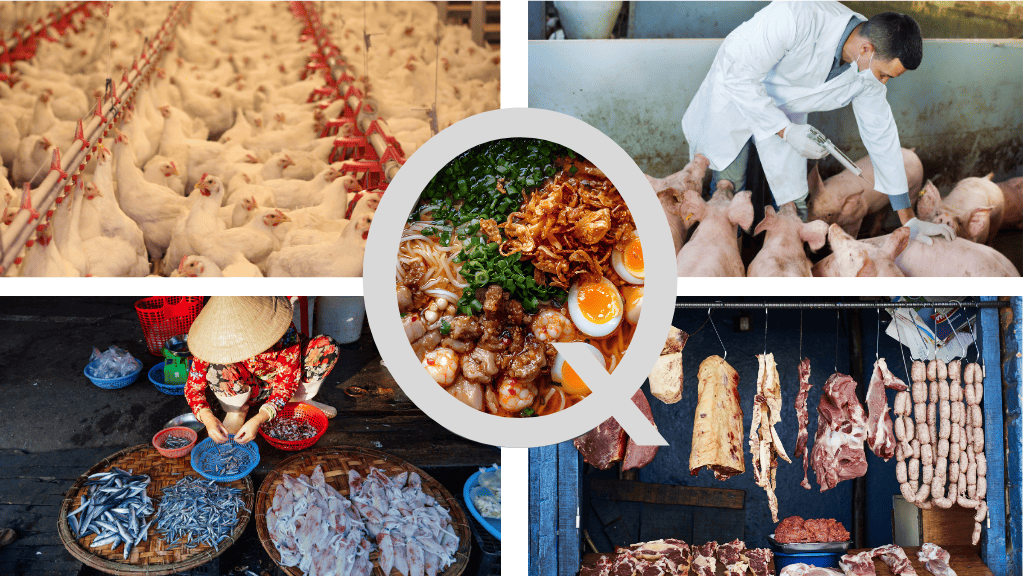
Description
In a context of increasing globalization of food trade and growing consumer expectations, food quality has become a strategic issue at the intersection of public health, economic development, consumer confidence and access to international markets. Far beyond food safety alone, food quality encompasses multiple dimensions—including organoleptic, nutritional, sanitary, technological, environmental, economic and societal aspects—that must be defined, measured, assured and recognized throughout the agri-food value chain.
QUALIFSI provides an integrated approach to food quality, from production to consumption. The course explores how quality is built through the practices of producers and food businesses, consumer expectations, inspection and control systems, laboratories, certification schemes, and international standards (Codex Alimentarius, WOAH, ISO and the WTO SPS Agreement), which facilitate international trade and promote harmonized practices across countries.
Through lectures, case studies, practical exercises, meetings with professionals and field visits, participants gain a comprehensive understanding of the different stakeholders involved in food quality. They develop a global perspective on the mechanisms that ensure compliance, prevent risks, enhance product value and strengthen the competitiveness of agri-food value chains, within a One Health and sustainable development framework.
This training programme is jointly organized by CIRAD, F'SAGRI (French South African Agricultural Institute) and ENSV-FVI VetAgro Sup. It takes place at CIRAD Montpellier – Baillarguet Campus (France).
Objectifs de la formation
By the end of the training, participants will be able to:
- Understand the different dimensions of food quality (organoleptic, nutritional, food safety, technological, economic, environmental and societal) and their significance in an international context.
- Analyse how food quality is built throughout agri-food value chains, identifying the roles of producers, processors, laboratories, official services, certification bodies and consumers.
- Understand the main international standards and regulatory frameworks governing food quality (Codex Alimentarius, WOAH, WTO SPS Agreement) and their implications for international trade.
- Identify the main tools used to ensure food quality, prevent risks and verify compliance, including HACCP, traceability, quality management systems, certification, official inspection and audits, and understand how these tools complement one another.
- Recognise food quality as a key driver of public health, value chain competitiveness, governance and sustainable development, within a One Health framework.
Public visé
This training is designed for veterinarians, engineers, agronomists, quality managers, professionals from the agri-food industry, laboratory specialists, official control officers, veterinary public health inspectors, import-export managers, and anyone involved in food quality, food safety, international trade or the development of agri-food value chains.
It is particularly suited to professionals involved in international cooperation projects, veterinary services capacity building, or the implementation of international food quality and safety standards (Codex Alimentarius, WOAH, ISO standards and the WTO SPS Agreement).
The course may also be of interest to agricultural counsellors, international experts, ministry officials, certification bodies, producer organizations, and public or private institutions working in these fields.
Applicants whose professional background does not exactly match these profiles may also be admitted, provided they can demonstrate relevant professional experience related to the course objectives.
Prérequis
Participants should:
-
Have a professional background in food safety, veterinary public health, agriculture, laboratory services, or related fields.
-
Possess basic knowledge of food production systems or regulatory frameworks (recommended but not mandatory).
-
Be proficient in English, as the training is delivered entirely in English.
Informations sur l'admission
This training is organized upon request for a dedicated group (approximately 12 participants).
The format (duration, content, case studies and field components) can be fully adapted to the institutional context and the needs of the commissioning organization.
A preparatory meeting can be organized in advance to tailor practical exercises and case studies to the country context, priority value chains and applicable regulatory frameworks.
The training can be delivered:
-
On-site in the requesting country
-
At CIRAD (Montpellier, France)
For a customized quotation or any additional information, please contact: 📩 prisme.formation@cirad.fr
Modalités pédagogiques
- The different dimensions of food quality: organoleptic, nutritional, food safety, technological, economic, environmental and societal.
- International frameworks and reference standards for food quality: Codex Alimentarius, WOAH, ISO standards and the WTO SPS Agreement.
- Food quality management, risk prevention and food safety assurance tools.
- Analysis of agri-food value chains and the roles of stakeholders involved in building and ensuring food quality.
- Organization of official control services, laboratories, certification bodies and food control systems.
- Applied case studies and analysis of real-life professional situations.
- Field visits and meetings with key stakeholders from agri-food value chains.
Moyens et supports pédagogiques
- Interactive workshops and practical exercises
- A continuous ("threaded") case study and group work
- Comparative tasting sessions and sensory analysis
- Meetings and discussions with producers, laboratories, certification bodies, official services and international experts
- Field visits and experience-sharing with professionals
- Illustrated lectures supported by audiovisual resources
- Peer-to-peer learning and exchange of professional experiences
Modalités d'évaluation et de suivi
-
Continuous assessment through group work, case study discussions and practical exercises
-
Group presentations based on applied value chain analysis
-
Active participation in interactive sessions
-
End-of-training evaluation questionnaire
-
Certificate of participation issued upon completion of the programme
Formateur(s)
The training is delivered by senior experts with extensive experience in:
-
Food safety and quality systems
-
Veterinary public health and official controls
-
International standards and regulatory frameworks (Codex Alimentarius, WOAH, WTO SPS Agreement)
-
Risk analysis and HACCP-based approaches
-
Capacity building and international cooperation projects
Trainers combine academic expertise, field experience and involvement in international programmes, ensuring a balance between strategic vision and practical implementation.
Guest speakers from public authorities, laboratories, professional organizations and international institutions may be invited depending on the programme format and country context.